Cylinder Liner Honing — What It Is and When You Need It
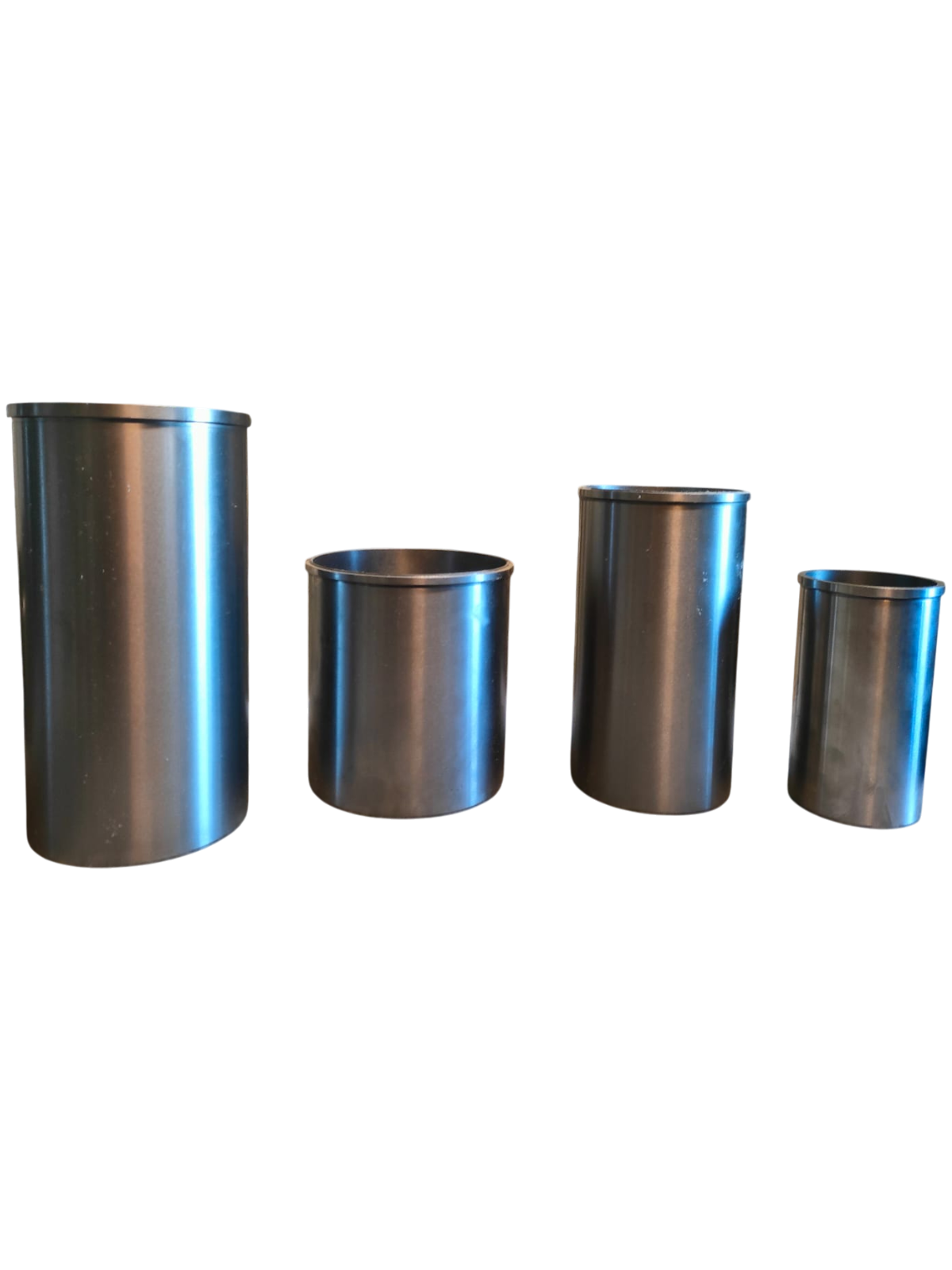
Honing is a finishing operation that gives the inner surface of a cylinder liner precise geometry and controlled roughness. This final stage decides how the oil film forms, how quickly the piston rings bed in and how long the engine actually lasts. At GREGORIUS, honing is a standard part of our workshop services.
What honing is and how it differs from grinding
Grinding removes a larger material allowance and sets the dimension, while honing works at the micron level — it corrects form errors (ovality, taper) and creates the characteristic surface structure. The tool is a set of abrasive stones that rotate and reciprocate at the same time.
The cross-hatch pattern and why it matters
Combining both movements creates a mesh of crossing lines on the wall — the cross-hatch pattern. These micro-grooves do two jobs: they hold oil to lubricate the rings and they drain away the excess. The honing angle is matched to the application:
- About 45° — a universal compromise between lubrication and oil-consumption control.
- A smaller angle — better oil-consumption control, used in some diesel engines.
- A larger angle — more intensive lubrication and faster ring bedding-in.
When to hone
- 1After grinding the liner or block to an oversize — honing is a mandatory finishing step.
- 2When fitting new rings — a fresh finish lets them bed in correctly.
- 3During cylinder regeneration, when the surface is glazed ("polished") and can no longer hold oil.
A wall that is too smooth is just as harmful as one that is too rough — in both cases the engine starts to burn oil.
Most common mistakes
The most common issues are incorrect roughness, folded peaks of the surface structure after overly aggressive machining, and inadequate cleaning afterwards, which leaves abrasive grit in the grooves. That is why honing is best left to a workshop with experience and the right machinery — described in our Technology section.
Need liner honing or cylinder regeneration?
Ask about the serviceFrequently asked questions
Does honing increase the cylinder diameter?
Only minimally — honing removes a few microns of material. A larger dimensional change is achieved by grinding to an oversize, followed by finish honing.
How do I know a cylinder needs honing?
Typical signs are increased oil consumption, a drop in compression and a smooth, "polished" wall with no visible honing marks.
Do I have to hone every time I change the rings?
Usually yes — a fresh surface structure is essential for new rings to bed in properly and for a tight combustion chamber.
See also
Need cylinder liners or valve seats?
We will match a part to your engine or make it to order.
Contact us